Model NO.:TR-RE1002
Material:Plastic
Certification:CE, ISO
Application:School, Hospital, Lab
Type:Low-Temperature Refrigeration
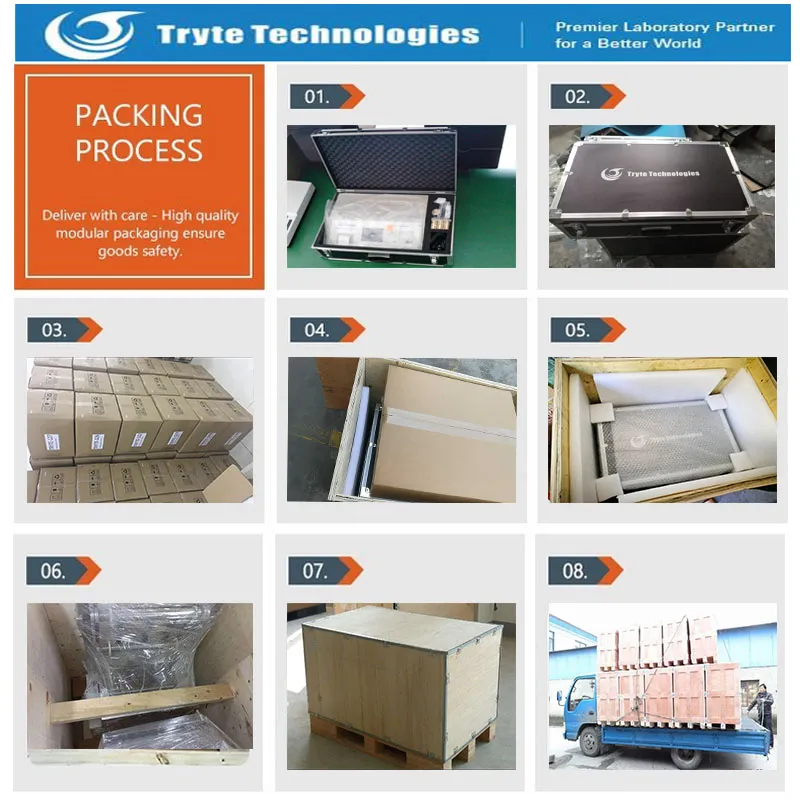
Transport Package:Paper/Wood Box
Specification:AC 100-240V, 50Hz/60Hz
Origin:China/Hongkong
PURPOSE AND CHARACTERISTICS OF THE ROTARY EVAPORATOR
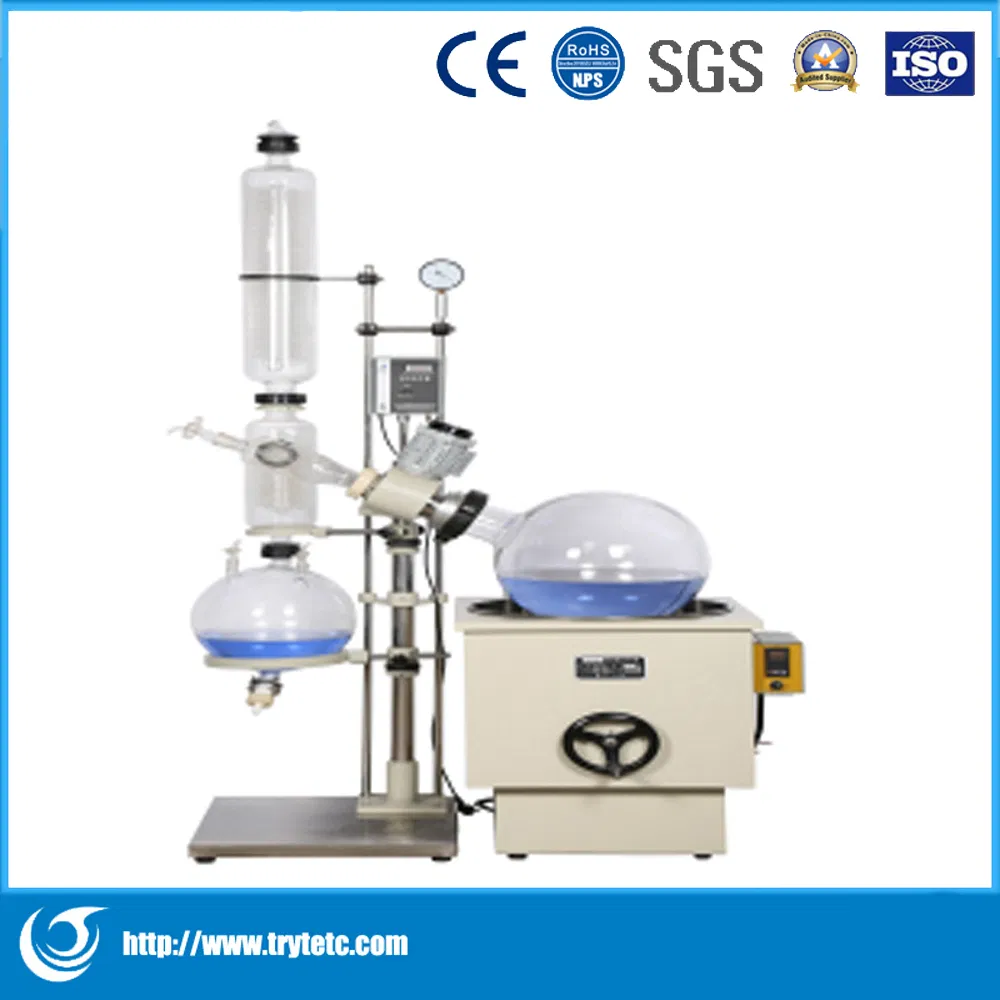
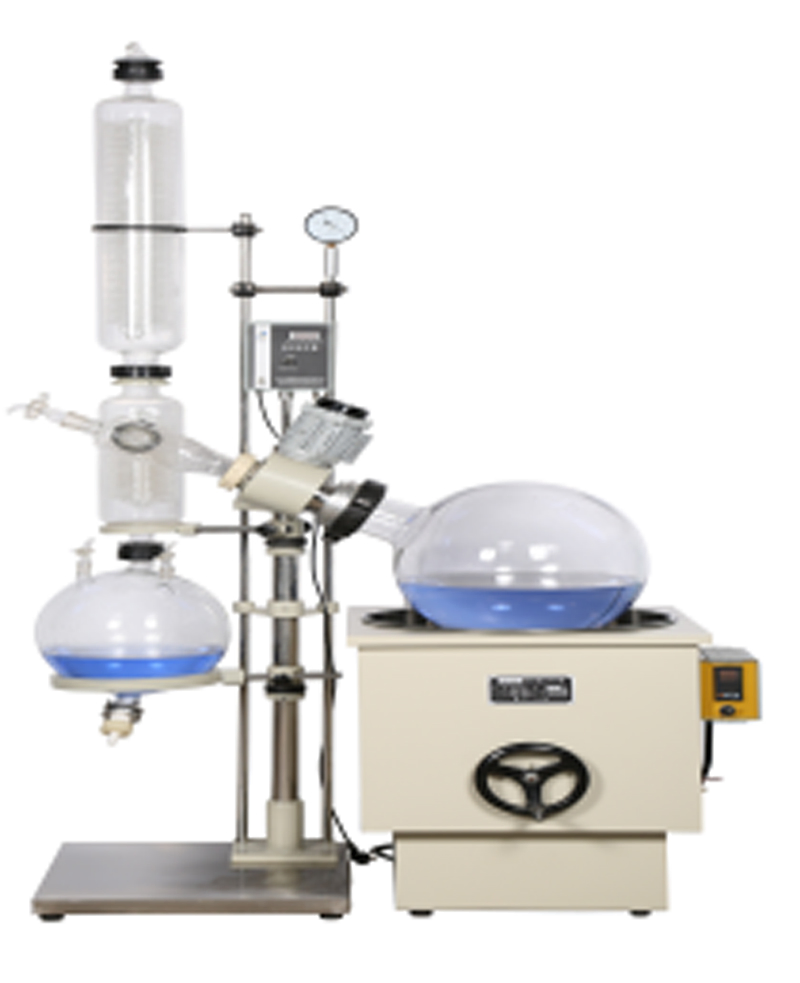
Rotary evaporators are designed to form a thin film through rotation while being heated under stable temperature and negative pressure conditions. This allows the solvent to be recycled efficiently. It is specifically ideal for heat-sensitive products requiring condensation, crystallization, separation, and solvent recovery. With structural modifications, it can also facilitate reflux extraction, making it widely applicable in science, biology, medicine, food, and the chemical industry.
Key Features:
- High vaporization and recycle rates using advanced frequency conversion for stable motor performance.
- Durable AC induction motor (brushless and sparkless) with stepless speed regulation.
- Modular design for strong expansibility, easy installation, and convenient maintenance.
- High-quality GG-17 high-temperature resistant boron-silicon glass components.
- Stainless steel base, heating bath, pole, and axis for superior anti-corrosion performance.
- PTFE valves and a sophisticated airtight system achieving vacuum degrees above -0.095MP.
- Constant-temperature water bath with a 180-320mm elevation range for operational ease.
?
Frequently Asked Questions
1. What is the primary use of this Rotary Evaporator?
It is used to form a thin film under vacuum and heat for solvent recovery, condensation, and crystallization, particularly for heat-sensitive materials.
2. What type of glass is used in the construction?
We use GG-17 high temperature-resisting boron-silicon glass, which provides excellent chemical and thermal resistance.
3. Can the equipment handle vacuum operations?
Yes, the airproof system with PTFE valves allows it to reach and maintain a vacuum degree above -0.095MP.
4. Is the rotation speed adjustable?
Yes, it features frequency conversion for stepless speed regulation, typically ranging from 0 to 120 rpm.
5. What industries is this equipment suitable for?
It is widely used in scientific research, biology, pharmaceutical labs, food processing, and the chemical industry.
6. How is the heating bath adjusted?
The system includes a manual lifting bath (with an option for automatic lifting) that can adjust the stroke up to 180mm.
 Suffolk Medical