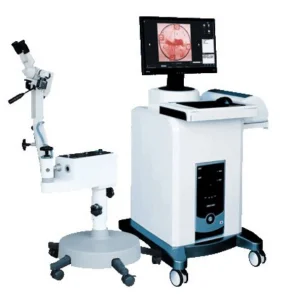
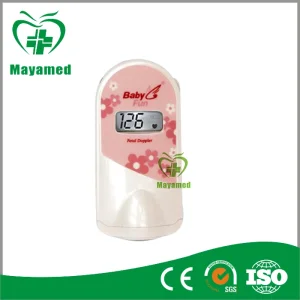
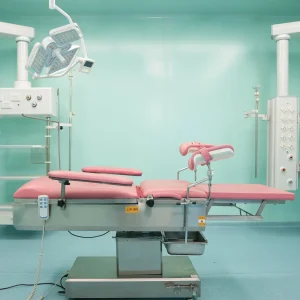
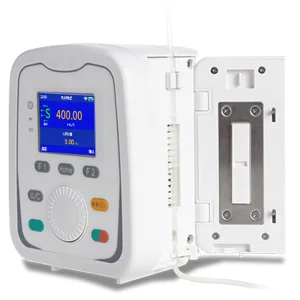
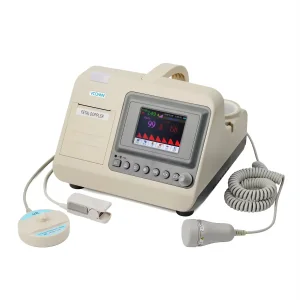
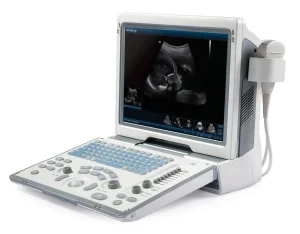
Explore our high-performance diagnostic, imaging, and monitoring systems engineered for international hospital guidelines and clinical standards.
Understanding structural shifts in diagnostic manufacturing hubs, international quality standards, and the value chain of SpO2 sensors.
The global pulse oximeter market has undergone a significant transformation. Once treated as a niche critical care tool, it is now an indispensable component of clinical diagnostic ecosystems and remote patient monitoring (RPM) pipelines. Top China manufacturers have pivoted from low-margin assembly to research-driven, clinical-grade production, offering high-fidelity photoplethysmography (PPG) instruments.
Dongguan and adjacent manufacturing centers in China command over 80% of the world's supply of optoelectronic components. This clustering enables seamless vertical integration—from raw silicon detector sourcing to microchip packaging. However, the true competitive differentiator for top suppliers lies in their ability to cross-reference designs with strict global standards, including the European Union's Medical Device Regulation (MDR 2017/745) and United States FDA 510(k) clearances.
Modern clinical demands necessitate advanced pulse oximeters that operate reliably under challenging clinical circumstances—such as low perfusion, skin tone variations, and patient motion artifacts. By implementing digital signal processing (DSP) microprocessors, top suppliers can dynamically filter environmental optical noise.
This involves incorporating red (660nm) and infrared (905/940nm) light-emitting diodes that emit wavelengths within a tolerance limit of ±2 nanometers. Advanced digital processing filters out ambient light artifacts, high-frequency muscular movements, and patient shivering. The resulting data stream provides clinicians with real-time plethysmograms and precise perfusion index (PI) readouts.
A deep dive into the optoelectronic architecture, sensor fabrication, and firmware algorithms of premium pulse oximetry devices.
Equipped with custom photodetectors that absorb optical variations under low-perfusion conditions. Uses high-efficiency LEDs with exact nanometer output tolerances for accurate HbO2 and Hb extinction coefficient separation.
Advanced firmware utilizes the Beer-Lambert mathematical model to extract accurate arterial pulsation curves from venous background absorption and baseline tissue scattering.
Engineered with medical-grade silicone components that prevent light leakage while ensuring patient comfort. Drop-tested housings withstand daily clinical wear and tear.
A standardized roadmap illustrating how custom designs transition from initial concept sketches to globally certified medical instruments.
Top suppliers provide more than off-the-shelf equipment; they offer robust OEM and ODM services tailored to medical device distributors and healthcare brands worldwide. Our end-to-end workflow begins with industrial design, 3D modeling, and PCB trace routing optimization, ensuring compliance with strict electromagnetic compatibility standards (IEC 60601-1-2).
Following layout design, functional prototypes undergo extensive simulation testing. These tests evaluate sensor response, component longevity, and battery life under various conditions. When entering the volume production phase, assemblies are manufactured in ISO 13485-certified cleanrooms, where automatic optical inspection (AOI) and in-circuit testing (ICT) guarantee high assembly yields.
The final phase involves regulatory and compliance registration. Experienced exporters assist B2B clients by providing complete technical documentation, risk management reviews (ISO 14971), and clinical evaluation reports (CER), accelerating local approvals with agencies like the FDA, CE, and ANVISA.
OEM/ODM clients can tailor pulse oximeter specifications to align with specific clinical requirements and brand positioning:
Choose between energy-efficient LED, high-contrast OLED, or full-color TFT screens with configurable waveform layouts and font orientations.
Integrate Bluetooth Low Energy (BLE), Wi-Fi, or Zigbee modules for seamless connection with health monitoring apps and hospital information systems.
Program customized threshold levels for audio/visual alerts, default measurement modes, and customized power-saving logic.
A leading medical equipment provider delivering intelligent diagnostic systems and surgical instruments to global healthcare networks.
Dongguan Suffolk Medical Co., Ltd. is a leading China-based OEM supplier specializing in smart surgical and diagnostic equipment designed to enhance hospital safety and operational efficiency. With years of experience in the healthcare technology sector, Suffolk Medical is committed to delivering high-quality solutions that support modern clinical practices and patient care standards.
The company's product portfolio covers a wide range of equipment, including advanced surgical instruments, patient monitoring systems, diagnostic imaging devices, sterilization tools, and integrated operating theatre solutions. Each product is developed with precision engineering and rigorous quality control to ensure reliability, accuracy, and compliance with international medical standards.
Dongguan Suffolk Medical emphasizes innovation and smart technology integration. Their equipment leverages digital interfaces, automated monitoring, and energy-efficient designs to improve workflow efficiency and reduce human error in clinical environments. The company also provides tailored OEM and ODM services, enabling hospitals, clinics, and medical distributors worldwide to access customized solutions that meet specific operational requirements.


Beyond product excellence, Suffolk Medical is dedicated to customer support and after-sales service, offering professional training, maintenance guidance, and technical consultation. Their global reach spans hospitals, specialized medical centers, and diagnostic laboratories, establishing a strong reputation for trustworthiness, performance, and innovation.
As a forward-looking healthcare technology provider, Dongguan Suffolk Medical Co., Ltd. continues to advance smart surgical and diagnostic solutions, empowering medical professionals with safe, efficient, and intelligent equipment that supports better patient outcomes.
How integrated pulse oximetry networks optimize hospital workflows and facilitate remote patient care.
Within emergency rooms and anesthesia recovery units, pulse oximetry provides instant patient assessments. Instant SpO2 readings help medical teams quickly evaluate cardiorespiratory stability during patient triage.
Integrating oximeters into Telehealth and Remote Patient Monitoring (RPM) networks allows chronic COPD and heart failure patients to share oxygen saturation data directly with healthcare providers in real time.
Designed for mountaineering, aviation training, and tactical applications, these rugged oximeters help users monitor physiological responses and adapt safely to hypoxic high-altitude conditions.
Essential guidance for procurement managers, medical distributors, and product developers sourcing diagnostic devices.
A continuation of our comprehensive portfolio, providing medical tools engineered to support operating rooms and critical care teams.
 Suffolk Medical