China’s top endoscopy systems are gaining attention for practical reasons, not only attractive specifications. Their effectiveness depends on how clearly clinicians can see tissue, control the scope, and document findings during real procedures. High-definition imaging, narrow-band or other contrast-enhancement modes, responsive insertion systems, and stable light sources can reveal subtle color changes or shallow lesions. Yet technology alone does not create reliable diagnosis.
What makes endoscopy systems more effective is the connection between image quality, usability, workflow, and clinical training. Dr. Douglas Rex, a leading gastroenterologist and colonoscopy researcher, has stated, “The most important quality measure in colonoscopy is the adenoma detection rate.” His point remains important: a system must help physicians detect meaningful abnormalities, not merely produce brighter pictures. A clear monitor, fast image processing, and ergonomic controls can reduce hesitation when the lens is moving through a narrow, curved section of the colon.
Chinese manufacturers have also focused on integrated recording, artificial intelligence assistance, compact designs, and service responsiveness. These features may support hospitals with different budgets and room layouts. The details matter. A stable image during withdrawal can prevent missed lesions. Simple buttons can reduce interruptions. Consistent maintenance can protect performance over time.
Still, no system is perfect. A sharper image can expose uncertainty rather than remove it. AI suggestions may assist experienced clinicians, but they cannot replace judgment, pathology, or proper training. Claims about “top” performance should therefore be tested through clinical evidence, usability studies, detection outcomes, and transparent after-sales support. The strongest system is not always the most expensive one. It is the one that works reliably when real patients, limited time, and imperfect conditions meet.
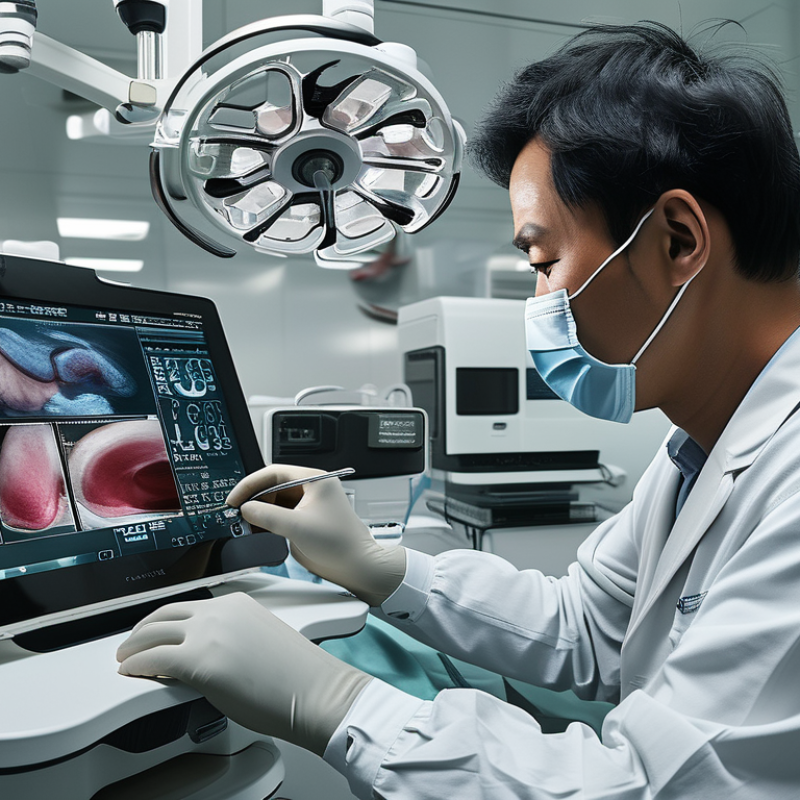
A top endoscopy system in China is defined by clinical consistency, not a bright monitor alone. The IARC Global Cancer Observatory estimated 4.82 million new cancer cases in China in 2022. This burden increases demand for reliable detection and repeatable examinations.
A strong system combines high-resolution imaging, stable color reproduction, low-latency processing, and practical controls. Optical enhancement should clarify small mucosal changes under uneven lighting. Smooth angulation matters when navigating narrow turns. Effective suction and water-jet functions also reduce interruptions during a procedure. ESGE quality-improvement guidance uses a minimum cecal intubation rate of 90% and an adenoma detection benchmark of 25%. Hardware cannot guarantee these outcomes. Training still matters.
Operational details often reveal real quality. A top system should support traceable recording, efficient reprocessing, durable insertion tubes, and fast technical maintenance. It should also fit Chinese hospitals with different room sizes, staffing levels, and budgets. AI-assisted detection may reduce missed lesions, but clinical validation and human review remain essential. That point is easy to overlook.
In practice, procurement teams should examine image performance with difficult cases, not only showroom demonstrations. They should test suction strength, boot time, cleaning workflow, and repair response. No platform is perfect. Even expensive equipment can underperform when staff training, maintenance, or infection-control discipline is weak. The best definition is therefore broader: dependable technology, measurable clinical quality, and support that survives daily hospital pressure.
| Evaluation Dimension | Relevant Technical Data or Benchmark | Why It Improves Effectiveness | What Defines a Top System in China |
|---|---|---|---|
| Image Resolution | Full high-definition imaging commonly uses 1920 × 1080 pixels; advanced systems may support 4K output at 3840 × 2160 pixels. | Higher resolution helps clinicians distinguish small lesions, mucosal irregularities, vascular patterns, and tissue boundaries. | Stable high-definition or 4K image output with low latency, accurate color reproduction, and consistent brightness across the field of view. |
| Image Enhancement | Digital contrast enhancement, narrow-band or spectral imaging, electronic magnification, and structure enhancement are commonly used functions. | Enhanced contrast can make subtle mucosal patterns and vascular structures easier to identify during inspection. | Multiple imaging modes that can be switched quickly without disrupting the examination, supported by clear on-screen controls. |
| Field of View and Optics | Many standard gastrointestinal endoscopes provide a forward field of view of approximately 140° or more, depending on the model and application. | A wider field of view reduces blind spots and supports more complete mucosal examination. | Clear optics, minimal distortion, reliable focus, and an adequate viewing angle for the intended procedure. |
| Insertion and Maneuverability | Typical adult gastrointestinal endoscopes have insertion tube diameters of approximately 9–13 mm, while selected therapeutic and pediatric models use different dimensions. | Balanced flexibility and control help the operator reach target anatomy while reducing patient discomfort and procedure time. | Responsive angulation, controlled torque transmission, smooth insertion, and model options suited to adult, pediatric, diagnostic, and therapeutic procedures. |
| Illumination | High-intensity LED or xenon-based light sources are used in endoscopy; LED systems generally offer long service life and efficient heat management. | Uniform illumination supports reliable lesion detection and reduces image variation during movement. | Even lighting, rapid brightness adjustment, low heat transmission, and stable performance during extended procedures. |
| Water, Air, and Suction | Integrated air or CO₂ insufflation, lens-washing water, and suction channels are standard workflow features; CO₂ is absorbed more rapidly than room air. | Effective flushing and suction improve visibility, while controlled insufflation supports procedural efficiency and patient comfort. | Reliable flow control, fast lens cleaning, compatible water-jet options, and easy access to consumable connections. |
| Artificial Intelligence Support | Computer-aided detection and characterization may provide real-time prompts for suspected polyps or lesions, but performance varies by indication and clinical setting. | AI can support attention, reduce missed-lesion risk, and improve consistency when used as an aid rather than a replacement for clinical judgment. | Locally compliant software, transparent performance data, low-latency alerts, adjustable sensitivity, and validated use in the target population. |
| Ergonomics | Ergonomic control bodies, programmable buttons, balanced weight distribution, and one-hand operation are key design considerations. | Better ergonomics reduce operator fatigue and help maintain precise control during lengthy or complex procedures. | Controls that can be customized, comfortable handling, clear user interfaces, and compatibility with common procedure-room layouts. |
| Reprocessing and Infection Control | Reusable flexible endoscopes require cleaning, leak testing, high-level disinfection or sterilization where applicable, rinsing, drying, and traceable storage according to validated instructions. | A reprocessing-friendly design reduces contamination risk and supports consistent infection-prevention practice. | Validated reprocessing instructions, accessible channels, leak-resistant construction, compatibility with automated endoscope reprocessors, and complete traceability. |
| Data and Connectivity | Common interfaces include USB, network connectivity, DICOM or hospital information-system integration, depending on configuration. | Digital records improve documentation, teaching, quality audits, follow-up, and multidisciplinary communication. | Secure image storage, patient-data protection, standardized reporting, easy export, and compatibility with the hospital’s existing IT environment. |
| Regulatory and Safety Compliance | Electrical medical equipment is commonly assessed against applicable IEC 60601 requirements; endoscopic equipment and reprocessing processes also require relevant national and international standards. | Compliance supports electrical safety, risk management, reliable operation, and lawful clinical deployment. | Valid registration or approval for the Chinese market, clear technical documentation, risk controls, service records, and conformity with applicable NMPA requirements. |
| Clinical Evidence | Useful evidence includes prospective studies, validated detection or characterization metrics, image-quality assessments, and procedure-level outcomes. | Clinical evidence shows whether technical functions translate into better detection, diagnosis, efficiency, or patient experience. | Peer-reviewed or independently reviewed evidence relevant to Chinese clinical workflows, patient populations, and intended indications. |
| Lifecycle Cost and Service | Total cost includes capital equipment, endoscope repairs, consumables, reprocessing accessories, software updates, training, and downtime. | Predictable lifecycle cost and responsive maintenance protect procedure capacity and reduce interruptions. | Transparent operating costs, accessible technical support, spare-parts availability, preventive maintenance, user training, and measurable service response times. |
Reliable performance defines it, not a bright monitor alone. It should provide clear images, stable colors, low-latency processing, and practical controls. Daily consistency matters more than showroom appearance.
Hospitals can review cecal intubation and adenoma detection rates. Suggested benchmarks include 90% cecal intubation and 25% adenoma detection. Equipment cannot create these results alone. Training still matters.
Optical enhancement can clarify small mucosal changes under uneven lighting. This may support more confident observation. It does not replace careful inspection or clinical judgment.
Effective suction can clear fluids and reduce interruptions. Water-jet functions help clean the viewing field. Small delays accumulate during busy sessions.
Reachable controls reduce unnecessary finger and wrist movement. A monitor near eye level may reduce repeated neck bending. Better comfort can support steadier scope handling.
Check button shapes, trolley height, cable routing, and foot-switch placement. Test the system beside anesthesia equipment. A layout can look efficient on paper but feel crowded in practice.
No. Artificial intelligence may help identify missed lesions, but clinical validation remains necessary. Human review is still essential. Overconfidence would be a mistake.
They should test difficult cases, suction strength, boot time, and recording functions. They should also observe cleaning workflows and technical response times. Showroom demonstrations are not enough.
Traceable recording, effective reprocessing, and durable insertion tubes support dependable daily work. Poor cleaning discipline can undermine advanced equipment. Expensive hardware is not automatically reliable.
Consider room size, staffing levels, procedure types, and available budget. User feedback should guide installation decisions. The best system fits the team’s actual rhythm, though no design works perfectly everywhere.
What makes endoscopy systems more effective is their ability to combine clear imaging, dependable performance, and efficient clinical workflow in one coordinated solution. A top endoscopy system in China should provide high-resolution visualization, balanced light control, accurate color reproduction, and useful image enhancement features that help clinicians identify subtle tissue changes. Its ergonomic design should also reduce hand fatigue, simplify scope handling, and improve comfort for both medical staff and patients during procedures.
Modern systems can further improve efficiency through AI-assisted observation, digital recording, data connectivity, and integration with hospital information platforms. These functions support smoother documentation, team collaboration, and consistent decision-making while keeping the clinician in control. Safety is equally important, requiring reliable disinfection compatibility, stable operation, clear maintenance procedures, and responsive technical support. When selecting a system, healthcare providers should evaluate image quality, usability, upgrade potential, staff training needs, total operating cost, and compliance with applicable safety standards.

 Suffolk Medical