How to Select the Right Gynecological Examination Chair?

Time:2026-09-20 Author:Amelia
0%

How to select a gynecological examination chair is not merely a purchasing question. It affects clinical access, patient dignity, staff posture, cleaning time, and daily workflow. A chair may look impressive in a showroom, yet feel unstable when a patient climbs aboard. That small detail matters.

The American College of Obstetricians and Gynecologists emphasizes respectful, patient-centered care during pelvic examinations. Its guidance supports clear communication, consent, privacy, and appropriate positioning. The World Health Organization also highlights quality, safety, and people-centered healthcare in its global service standards. Meanwhile, market analyses from Grand View Research show continued growth in gynecological devices, but market growth does not guarantee better clinical design. Product claims still require careful checking.

Dr. Jen Gunter, an obstetrician-gynecologist and women’s health author, has repeatedly emphasized a simple principle: “A pelvic exam is not a test of your worth.” That reminder belongs in equipment decisions. A suitable chair should support dignity, not treat the patient as a technical object. Look closely at adjustable height, pelvic access, leg-support stability, upholstery seams, weight capacity, emergency lowering, and disinfectant compatibility. Ask staff to test the chair while wearing gloves. Watch whether controls are reachable without twisting. Notice the sound of the motor.

There is no perfect chair. Clinics sometimes prioritize price and regret the decision later. This guide examines how to select a gynecological examination chair using clinical experience, professional standards, and practical evidence. The final choice should fit real rooms, real patients, and real workloads.
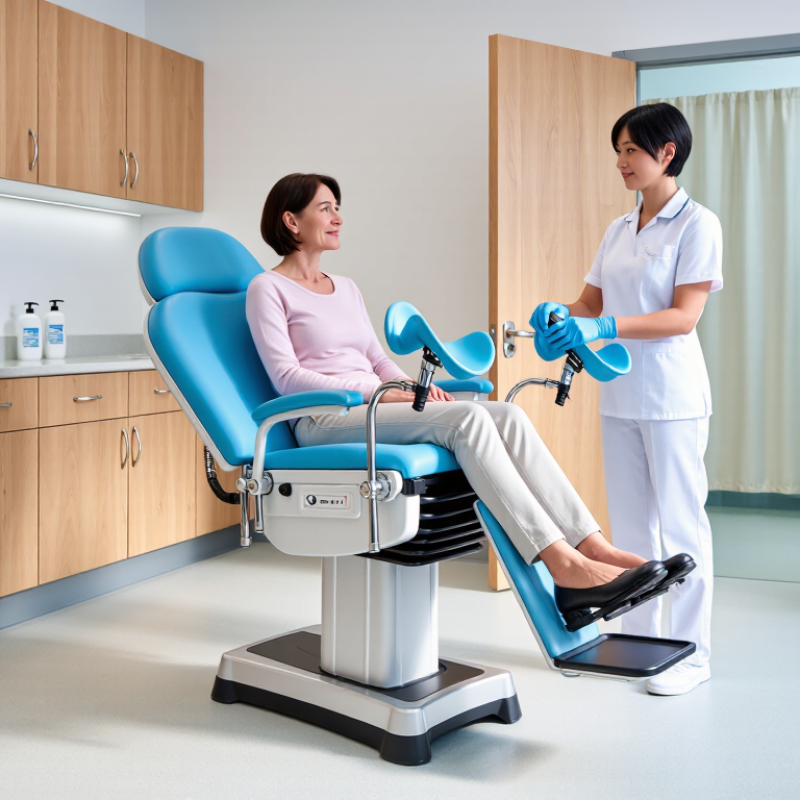
How to Select the Right Gynecological Examination Chair?

Understanding the Purpose and Types of Gynecological Examination Chairs

How to Select the Right Gynecological Examination Chair?

A gynecological examination chair supports safe positioning, clear clinical access, and patient dignity. Its purpose extends beyond holding the patient during an examination. It should help clinicians work with less strain while keeping patients stable and comfortable. Adjustable height improves access for pelvic examinations, cervical screening, and minor procedures. A supportive backrest can reduce anxiety, especially when patients feel exposed. Small details matter.

Different chair types suit different clinical settings. Manual hydraulic chairs are practical where budgets or maintenance resources are limited. Electric chairs offer smoother height, backrest, and tilt adjustments. They may help clinicians maintain better posture during long consultations. Fixed examination chairs provide dependable stability and often require less technical support. Mobile models can serve flexible rooms, but their casters must lock firmly. Some chairs include leg supports or stirrups for lithotomy positioning. These accessories should adjust easily and protect pressure-sensitive areas.

Selection should reflect real workflow, not appearance alone. Check the safe working load, adjustment range, upholstery seams, and cleaning compatibility. Ask whether staff can lower the chair quickly during an emergency. A foot control may improve efficiency, but poorly placed controls can create confusion. Electric models are not automatically better. Some clinics may prefer simpler equipment with fewer failure points. Patient feedback can reveal discomfort that specifications miss. Reassess the choice after several weeks of use. A chair that fits the room may still fail the people using it.

Assessing Patient Safety, Comfort, and Accessibility Features

How to Select the Right Gynecological Examination Chair?

Patient safety should guide every chair decision. The World Health Organization reports that about one in ten patients experiences harm during healthcare, and more than half of these events are preventable. A gynecological examination chair should have stable locking casters, secure leg supports, and a clearly marked emergency-lowering function. Its weight capacity must exceed the clinic’s expected needs. Smooth, sealed upholstery also supports reliable cleaning between patients.

Comfort is clinical, not cosmetic. Look for contoured padding, quiet electric movement, adjustable height, and controls that avoid sudden starts. A low entry position can reduce transfer strain, especially for older patients or those with limited mobility. The CDC estimates that one in four U.S. adults has a disability. Therefore, accessibility deserves more than a removable step. Check wheelchair approach space, transfer handles, reachable controls, and adequate legroom. Test the chair with staff and, when appropriate, patient representatives. A design can seem ideal on paper yet feel exposed or unstable in practice.

Tips: Ask a nurse to simulate a difficult transfer. Test the emergency stop with gloves. Inspect every seam and hinge. Listen for motor noise. Record patient feedback after installation. Do not assume one chair suits every body; that assumption is easy to miss. Review WHO patient-safety guidance and current CDC disability data when setting procurement criteria.

Comparing Adjustability, Materials, and Clinical Functionality

How to Select the Right Gynecological Examination Chair?

Adjustability should match real clinical movement, not just a specification sheet. Select a chair with powered height adjustment, a stable backrest, and independently positioned leg supports. These features help clinicians maintain neutral shoulder and wrist positions during examinations. They also support safer patient transfers, especially for people with limited mobility. Test the controls while wearing gloves. Small switches can become frustrating quickly.

Materials influence infection prevention and daily durability. Choose seamless upholstery, sealed edges, and surfaces that tolerate approved hospital disinfectants. Avoid deep stitching and exposed hinges, where fluids and debris may collect. The WHO and UNICEF JMP 2023 report found that only 78% of healthcare facilities had basic water services in 2022. Cleaning efficiency therefore matters, even in well-equipped clinics. A glossy surface may look professional, but glare can hide contamination. This detail is easy to overlook.

Clinical functionality should include a clear working load, emergency lowering, accessible foot controls, and secure leg supports. Confirm that the chair remains stable at its highest position. The WHO Global Report on Infection Prevention and Control, published in 2022, states that effective infection-prevention programs can reduce healthcare-associated infections by up to 70%. A chair supports that goal only when staff can clean it consistently. I would not claim that maximum adjustability always means better care. More mechanisms can also mean more maintenance, noise, and failure points. Ask clinicians to test the chair during a complete examination, not during a short showroom demonstration.

Evaluating Hygiene, Maintenance, and Infection Control Requirements

How to Select the Right Gynecological Examination Chair?

Hygiene should guide the chair selection, not appearance alone. Choose smooth, nonporous upholstery with sealed seams and minimal crevices. Fluids can collect beneath poorly fitted cushions. That hidden area matters. The surface must tolerate approved hospital disinfectants without cracking, fading, or becoming sticky. Ask for chemical-compatibility data before purchasing.

Maintenance requirements should fit the clinic’s daily workload. A chair with removable, washable components can simplify cleaning between patients. Check how easily staff can reach hinges, rails, foot supports, and control panels. Electrical parts should remain protected during routine disinfection. Clear cleaning instructions are essential, but instructions are sometimes too general. Request practical guidance for stains, spills, and accidental fluid entry. Keep inspection records for upholstery, moving parts, cables, and locking mechanisms.

Infection control also depends on workflow. The chair should support safe positioning without forcing staff to touch contaminated surfaces repeatedly. Hands-free controls may reduce contact, but they still need regular disinfection. Select a design that allows enough space around the patient and permits thorough floor cleaning. Staff training should cover contact times for disinfectants, glove changes, and correct waste handling. A checklist helps. It can still fail when rushed. Review real cleaning performance periodically, and invite nurses to report awkward surfaces or repeated maintenance problems. Their observations may reveal risks that a product brochure never shows.

How to Select the Right Gynecological Examination Chair?

Evaluate whether the chair and related equipment support the appropriate reprocessing method for each level of patient contact.

Interpretation: Chair upholstery, stirrups, handles, and control panels normally contact intact skin and require cleaning followed by low-level disinfection. Reusable instruments that contact mucous membranes require high-level disinfection, while instruments entering sterile tissue require sterilization. Select chairs with seamless, non-porous surfaces, minimal crevices, removable accessories, and controls that can be disinfected without damaging the equipment.
Processing scale: 1 = cleaning only, 2 = low-level disinfection, 3 = high-level disinfection, 4 = sterilization. Requirements should be verified against local infection-control policies and the equipment manufacturer's instructions.

Selecting a Chair Based on Space, Budget, and Long-Term Value

How to Select the Right Gynecological Examination Chair?

Space, budget, and long-term value should guide every examination chair decision. Measure doorways, turning areas, power points, and storage clearance before comparing features. A chair that fits the room but blocks staff movement is not efficient. It can also complicate cleaning and patient transfers.

WHO’s Global Patient Safety Action Plan 2021–2030 reports that one in ten patients experiences harm during healthcare, with more than half considered preventable. A chair cannot remove every risk. However, stable positioning, accessible controls, and smooth height adjustment can support safer examinations. The CDC’s Guideline for Disinfection and Sterilization also emphasizes cleanable surfaces and appropriate disinfection of reusable equipment. Look closely at seams, hinges, upholstery, and hidden gaps. Small details matter.

Budgeting should include installation, servicing, replacement parts, training, and expected downtime. A cheaper chair may become expensive when repairs interrupt appointments. Still, the highest-priced option is not automatically the best investment. Compare warranty terms, tested load capacity, adjustment cycles, and maintenance access. The mistake is focusing only on the invoice. A simple five-year cost worksheet can expose weak assumptions, especially when appointment volume changes. Leave some budget for future needs, because clinics rarely remain exactly the same.

FAQS

What is the main purpose of a gynecological examination chair?

It supports stable positioning, clinical access, and patient dignity. Adjustable height can reduce clinician strain during pelvic examinations. A supportive backrest may ease anxiety. Small details matter.

Which chair type suits a clinic with limited maintenance resources?

A manual hydraulic chair may suit clinics with smaller budgets. It has fewer electrical parts and may be easier to maintain. Simple equipment can be useful. It is not automatically inferior.

Are electric examination chairs always the better choice?

No. Electric models provide smoother height, backrest, and tilt adjustments. However, they need reliable power and technical support. More features also mean more possible failure points.

What safety features should buyers check?

Check locking casters, secure leg supports, and a clearly marked emergency-lowering function. Confirm that the safe working load exceeds expected patient needs. Test the emergency stop while wearing gloves. Do not rely on appearance.

How can a chair improve accessibility?

A low entry position can reduce transfer strain. Leave space for wheelchair approach and provide stable transfer handles. Controls should be reachable without twisting. A removable step alone may not be enough.

Which comfort details deserve close attention?

Look for contoured padding, quiet movement, and gradual starts. Leg supports should adjust easily and avoid pressure-sensitive areas. Ask patients about exposed or unstable feelings. Specifications may miss those experiences.

What upholstery and design features support infection control?

Choose smooth, nonporous upholstery with sealed seams and few crevices. Fluids can hide beneath poorly fitted cushions. The surface should tolerate approved hospital disinfectants without cracking or becoming sticky. Hidden areas matter.

What maintenance checks should staff perform?

Inspect upholstery, hinges, cables, control panels, foot supports, and locking mechanisms. Check whether staff can reach every surface during cleaning. Keep inspection records. A checklist helps, but rushed work can still fail.

How should a clinic evaluate a chair after installation?

Reassess it after several weeks of real use. Ask nurses to simulate difficult transfers and report awkward surfaces. Record patient feedback about comfort and stability. A chair may fit the room, yet fail its users.

Conclusion

Choosing the right gynecological examination chair requires a clear understanding of how it will be used, the types of examinations performed, and the needs of both patients and medical staff. How to select a gynecological examination chair depends on evaluating essential features such as stable construction, comfortable positioning, easy access, adjustable height, backrest movement, and supportive safety elements. Accessibility should be considered carefully to accommodate patients with different mobility levels and physical needs.

The chair should also be made from durable, easy-to-clean materials that support effective hygiene and infection control. Examine how easily surfaces, cushions, and removable components can be maintained between appointments. In addition, consider available room space, installation requirements, operating budget, energy or maintenance costs, and expected service life. A well-chosen chair should combine clinical functionality, patient comfort, staff efficiency, and reliable long-term value rather than focusing only on the initial purchase price.

Amelia

Amelia

Amelia is a seasoned marketing professional with a wealth of expertise in our company’s core offerings. With an unwavering passion for driving growth and innovation, she plays a pivotal role in shaping our marketing strategies and enhancing brand visibility. A key aspect of her responsibilities......