MRI technology has revolutionized the medical imaging field. Expert Dr. Linda Carter, a leader in diagnostic radiology, states, "MRI scans provide unparalleled detail, allowing for precise diagnoses." This statement reflects the profound impact MRI scanners have on diagnostic accuracy.
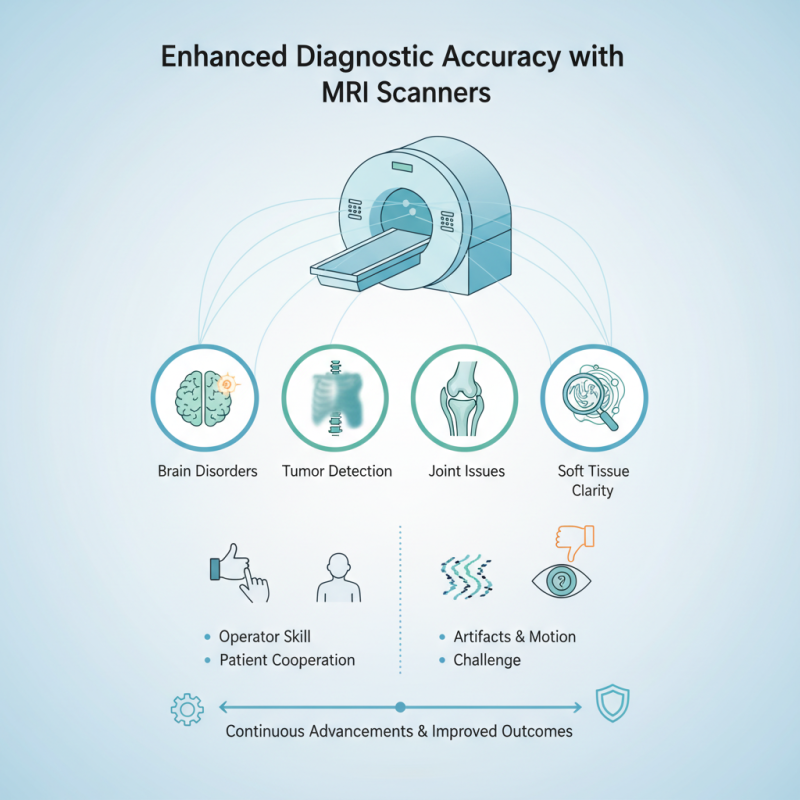
How MRI scanners improve diagnostic accuracy is evident in various clinical settings. These machines can visualize soft tissues with remarkable clarity. This capability aids in detecting conditions such as tumors, brain disorders, and joint issues. However, not all images guarantee an accurate diagnosis. Factors such as the operator's skill and patient cooperation play critical roles.
Despite their advantages, MRI scans are not perfect. Artifacts and motion can affect image quality. Radiologists must interpret scans carefully, balancing detail with clinical context. Continuous advancements in MRI technology strive to minimize these imperfections, reinforcing its essential role in modern medicine.
The Evolution of MRI Technology in Medical Diagnostics
The evolution of MRI technology has been remarkable, contributing significantly to diagnostic accuracy in medical settings. In recent years, advancements have increased resolution and reduced scan times. According to the Radiological Society of North America (RSNA), high-field MRI systems can produce images with a resolution four times higher than older machines. This shift has led to earlier detection of conditions like tumors and brain disorders.
Enhancements in artificial intelligence integration have transformed MRI interpretation. A study published in the Journal of Medical Imaging found that AI-assisted analysis improves radiologists' accuracy by up to 30%. This technology reduces human error, but it also raises questions about reliance on machines. While AI offers promising advantages, radiologists must remain critical of its interpretations.
Despite these advancements, challenges persist. MRI remains sensitive to patient movement, which can affect image quality. Additionally, costs associated with MRI technology can limit accessibility in some regions. Addressing these issues is essential for ensuring that the benefits of modern MRI technology are truly widespread. As MRI continues to evolve, a focus on both technological refinement and practical implementation will shape the future of medical diagnostics.
Key Principles of MRI Scanning and Image Acquisition
MRI scanning is a cornerstone for precise diagnostics, due to its ability to create detailed images of internal structures. The process begins with the alignment of hydrogen nuclei in the body. A magnetic field causes these nuclei to resonate. This resonance generates signals that are captured and converted into images. The clarity of MRI images allows healthcare professionals to visualize soft tissues, which is crucial in diagnosing conditions such as tumors, brain disorders, and joint injuries.
The image acquisition process employs advanced techniques like echo planar imaging (EPI) and diffusion tensor imaging (DTI). According to a report by the Radiological Society of North America, MRI can enhance diagnostic accuracy by over 30% for certain conditions when compared to traditional imaging methods. However, challenges remain. Artifacts from patient movement or metallic implants can compromise image quality. Clinicians must remain vigilant regarding these factors to avoid misinterpretation.
Furthermore, the interpretation of MRI scans depends on the radiologist's expertise. Training and experience play vital roles in diagnosing conditions accurately. Data from the American College of Radiology indicates that misinterpretations can occur in up to 20% of cases. Continuous education and technological advancements are crucial for improving accuracy. The benefits of MRI are significant, yet the potential for error necessitates careful scrutiny and validation in clinical practice.
How MRI Improves Accuracy in Diagnosing Various Conditions
MRI technology has transformed the landscape of medical diagnostics. It offers detailed imagery of soft tissues, which is crucial for accurate diagnosis. Conditions like tumors, degenerative diseases, and brain disorders benefit immensely from MRI's capabilities. The high-resolution images allow doctors to detect abnormalities that might go unnoticed with other imaging methods.
The process isn't without its challenges. While MRI is powerful, interpreting images requires specialized training. Radiologists must discern between normal variations and concerning issues. Misinterpretations, though rare, can lead to unnecessary anxiety or missed diagnoses. Continuous education and experience enhance radiologists' skills, ensuring improved diagnostic accuracy.
Patients also face hurdles. The MRI experience can be intimidating, and some individuals may feel claustrophobic in the machine. Open MRIs are an option, but they might not provide the same level of detail. Nonetheless, understanding these nuances is essential for making informed decisions regarding one’s health.
Despite its intricacies, MRI remains a cornerstone of modern diagnostics, crucial for achieving better patient outcomes.
Comparative Analysis: MRI versus Other Imaging Techniques
MRI scanners have revolutionized the field of medical imaging, especially in diagnostics. Unlike X-rays or CT scans, MRI provides better soft tissue contrast. This makes it particularly effective for detecting tumors, brain diseases, and joint issues. The absence of ionizing radiation is another significant advantage. However, MRI is not without its challenges. High costs and longer scan times might limit accessibility in some regions.
When comparing MRI to other imaging techniques, consider the specific needs of the patient. For instance, while MRI excels in soft tissue imaging, CT scans can deliver quicker results, especially in trauma cases. Ultrasound remains a cost-effective option for many conditions. However, its limitations in depth and detail can lead to missed diagnoses. Each technique has its unique strengths, making them complementary rather than purely competitive.
**Tips:** Always discuss with your healthcare provider to determine the best imaging technique for your situation. Be informed about the potential limitations of each option. Sometimes, a combination of imaging techniques can lead to a more accurate diagnosis.
Impact of MRI on Patient Outcomes and Treatment Decisions
MRI technology has transformed the landscape of medical diagnostics. It offers high-resolution images of internal structures, aiding in the accurate identification of conditions. When healthcare professionals have access to detailed MRI scans, they can make informed decisions about patient care. This leads to targeted treatment plans and improved health outcomes.
Patients often experience anxiety while awaiting results. The clarity that MRI provides can significantly reduce this stress. For instance, an MRI can reveal whether a tumor is benign or malignant, guiding the next steps in treatment. With better visualization, specialists can analyze complex cases effectively. This enhanced diagnostic approach fosters a collaborative atmosphere among doctors.
While MRI is highly effective, it is not infallible. Misinterpretation can occur, sometimes leading to undue worry or unnecessary procedures. Healthcare teams must continuously refine their skills and stay updated on best practices. Patient outcomes depend on the synergy of advanced technology and professional expertise. Balancing innovation with clinical judgment is essential for truly effective treatment decisions.
FAQS
: MRI technology has advanced in resolution and reduced scan times significantly, aiding in diagnostic accuracy.
AI integration improves radiologists' accuracy by up to 30%, but reliance on machines can raise concerns.
Patient movement affects image quality, and high costs can limit accessibility in some areas.
MRI provides superior soft tissue contrast, but CT scans may offer quicker results in trauma situations.
Waiting for results can cause stress, but MRIs can clarify conditions, like distinguishing benign from malignant tumors.
Misinterpretation can happen, leading to unnecessary worry or procedures. Continuous skill refinement is needed.
Using multiple techniques can ensure a more accurate diagnosis by leveraging each method's strengths.
Discuss with healthcare providers to determine the best method based on individual needs and limitations.
No, while beneficial, MRI is not infallible and must be complemented with professional expertise for better outcomes.
High-resolution scans allow for targeted treatment plans, improving patient care and outcomes significantly.
Conclusion
Magnetic Resonance Imaging (MRI) has significantly evolved over the years, enhancing its role in medical diagnostics. This technology operates on key principles of magnetic fields and radio waves to provide high-resolution images of internal structures, allowing for accurate assessment of various health conditions. How MRI scanners improve diagnostic accuracy is evident in their ability to differentiate between normal and abnormal tissues, leading to earlier and more reliable diagnoses.
In comparing MRI with other imaging techniques, its superior contrast resolution particularly excels in soft tissue visualizations, making it indispensable for diagnosing neurological, orthopedic, and cardiovascular conditions. The impact of MRI on patient outcomes is profound; accurate diagnoses allow for better-informed treatment decisions, ultimately improving the overall effectiveness of healthcare interventions and enhancing patient quality of life.

 Suffolk Medical