Surgery requires precision and care. One crucial element that ensures patient safety is continuous monitoring. Why patient monitors are critical during surgery cannot be overstated. These devices provide real-time data on essential metrics like heart rate, blood pressure, and oxygen levels. Surgeons rely heavily on this information to make swift decisions.
Without patient monitors, subtle changes can go unnoticed. A sudden dip in oxygen levels may indicate serious complications. Having the ability to detect these changes instantly is vital. It can mean the difference between life and death.
Moreover, patient monitors help track anesthesia effects. Anesthesia can significantly impact vital signs. This tracking helps anesthesiologists adjust dosages appropriately. Even small errors in this process can lead to adverse outcomes. Therefore, the presence of patient monitors not only enhances safety but also builds confidence among the surgical team.
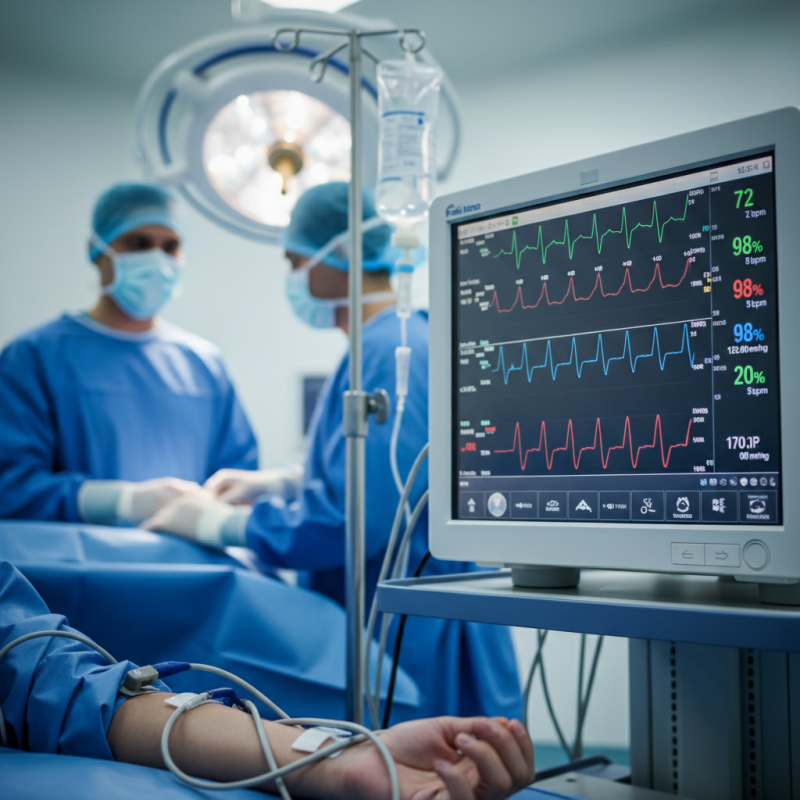
Patient monitoring plays a critical role in surgical settings. According to the American Society of Anesthesiologists, about 10% of patients experience complications during surgery. Continuous monitoring can significantly reduce this risk. The use of advanced monitors allows healthcare professionals to track vital signs in real-time. This includes heart rate, blood pressure, and oxygen saturation. Sudden changes can indicate complications, giving surgical teams a chance to respond swiftly.
The Anesthesia Patient Safety Foundation emphasizes that effective monitoring can decrease anesthesia-related morbidity. Various studies show that the implementation of patient monitoring systems has improved outcomes by over 30%. However, the reliance on technology brings challenges. Not all surgical teams are trained equally in interpreting monitor data. Misinterpretation can lead to delays in response, which may worsen patient conditions.
Surgical rooms are not without their hazards. A 2021 report highlighted that approximately 50% of surgical errors are linked to communication lapses. In this environment, real-time data from monitors serves as an essential communication tool. It informs the entire surgical team and helps maintain a high standard of patient safety. Investing in proper training and technology is vital. Yet, the human factor must always be considered to fully harness the potential of patient monitoring.
| Monitoring Parameter | Normal Range | Critical Values | Significance |
|---|---|---|---|
| Heart Rate (HR) | 60-100 bpm | < 40 bpm or > 150 bpm | Indicates cardiac function and response to surgery. |
| Blood Pressure (BP) | 90/60 to 120/80 mmHg | < 70/40 mmHg or > 180/120 mmHg | Crucial for assessing perfusion and vascular status. |
| Oxygen Saturation (SpO2) | 95-100% | < 90% | Reflects oxygen delivery and respiratory function. |
| Temperature | 36.1-37.2 °C | < 35 °C or > 38 °C | Indicates risk of infection or hypothermia. |
| Respiratory Rate (RR) | 12-20 breaths/min | < 8 breaths/min or > 30 breaths/min | Important for assessing ventilation and oxygenation. |
: Patient monitoring reduces complications by tracking vital signs like heart rate and blood pressure in real-time.
Heart rate, blood pressure, oxygen saturation, and temperature are crucial for assessing a patient’s condition.
Effective monitoring systems can improve surgical outcomes by over 30%, according to various studies.
Not all surgical teams interpret monitor data equally, leading to possible misinterpretations and delays in response.
About 50% of surgical errors are due to communication failures; real-time data from monitors helps bridge these gaps.
Ensure devices are calibrated and undergo regular maintenance to maintain reliability and accuracy.
No, human factors and staff training are crucial to fully utilize patient monitoring and ensure safety.
A drop below safe thresholds necessitates immediate intervention to protect vital organs.
Training staff to recognize alarm patterns enhances awareness and improves patient safety.
It can lead to missed warning signs, making constant vigilance vital during surgical procedures.
Patient monitors play a pivotal role in ensuring the safety of surgical procedures. Why patient monitors are critical during surgery lies in their ability to continuously track vital signs such as heart rate, blood pressure, and oxygen saturation. These key parameters are essential for detecting any abnormalities that may arise during an operation, allowing for immediate intervention and reducing the risk of complications.
In addition to monitoring essential metrics, advancements in patient monitoring technology have significantly enhanced surgical safety. The integration of sophisticated sensors and real-time data analytics facilitates proactive care, while adherence to regulatory standards ensures that these systems meet the required safety benchmarks. Ultimately, the ongoing evolution of patient monitoring systems is vital for improving patient outcomes and fostering a secure surgical environment.

 Suffolk Medical