China’s infusion pump market is expanding across hospitals, clinics, and home-care settings. Reliable performance matters wherever medication moves through narrow tubing.
The question, Why infusion pumps need calibration, is not merely technical. It concerns dose accuracy, alarm timing, flow stability, and patient protection. A pump may display 50 mL per hour, yet deliver less during back-pressure, occlusion, or worn-tubing conditions. Small deviations can become serious during neonatal care, chemotherapy, or critical infusions.
Biomedical engineer Dr. David W. Kaczmarek explains, “Calibration turns a pump’s displayed performance into measurable confidence.” His point is practical. Nurses trust the screen, but technicians must verify what happens at the outlet. A calibrated pump should be tested with suitable fluid, pressure conditions, delivery intervals, and traceable instruments.
Calibration also supports supplier evaluation. China’s top infusion pump suppliers should provide documented procedures, acceptance limits, service records, and certificates linked to recognized laboratories. Standards such as IEC 60601-2-24 can guide performance testing, while ISO/IEC 17025 strengthens measurement confidence.
Still, calibration is not a magic shield. A certificate cannot correct damaged tubing, poor cleaning, battery failure, or incorrect programming. That part is easy to overlook. Hospitals need routine checks, trained biomedical teams, and clear escalation rules after repairs or unusual readings.
This guide examines why calibration influences safety, compliance, maintenance costs, and supplier credibility. It also considers a difficult reality: even a modern pump can become unreliable when verification is delayed.
What Infusion Pumps Are and How They Work
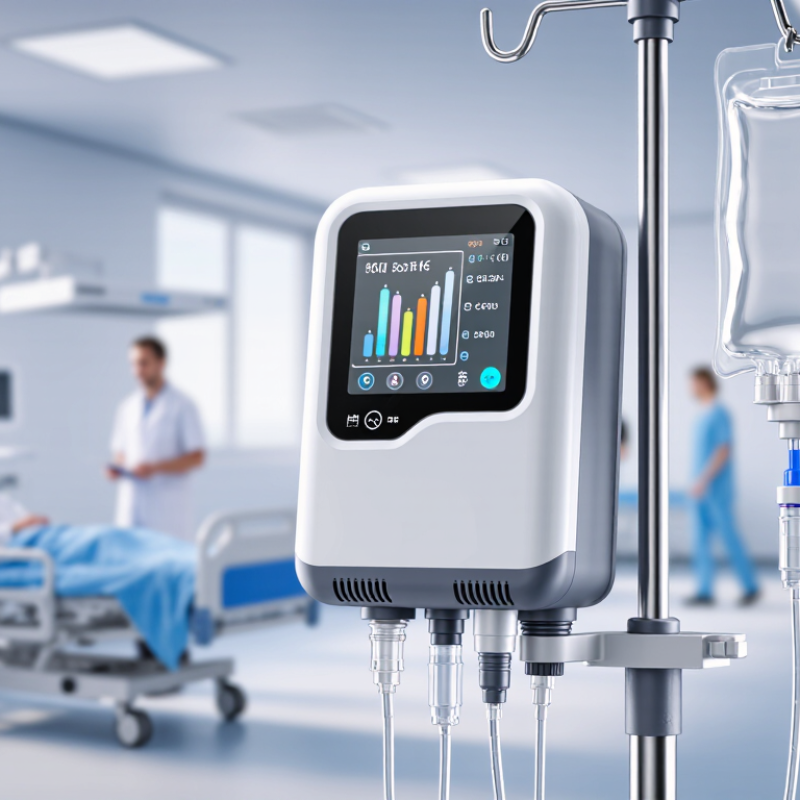
Infusion pumps are medical devices that deliver fluids into a patient’s bloodstream at a controlled rate. These fluids may include saline, nutrition, or prescribed medication. Unlike gravity-fed systems, a pump uses programmed pressure and flow settings. It can provide a steady delivery over minutes or several hours.
Common designs include volumetric pumps and syringe pumps. A volumetric model moves fluid through flexible tubing with a peristaltic mechanism. A syringe pump pushes the syringe plunger with a motor-driven mechanism.
The user enters the flow rate, volume, and sometimes dosage limits. Sensors monitor pressure, air bubbles, and the pump door. When something changes, the device should trigger an alarm.
Calibration matters because a small flow error can affect treatment. A pump set at 10 milliliters per hour should deliver close to that rate under defined test conditions. Technicians compare its output with a traceable measurement device. They also inspect alarms, occlusion detection, battery performance, and keypad accuracy. A clean exterior proves little. The internal measurement system may still drift.
In real clinical work, tubing position, fluid temperature, and back pressure can influence delivery.
Staff may assume the displayed number is always correct. That assumption needs checking. Calibration intervals should follow risk assessment, usage, service history, and applicable technical requirements.
Records must show the test method, results, adjustments, and technician qualification. No calibration process is flawless. Careful verification reduces uncertainty.
China’s Top 10 Infusion Pump Suppliers by Product Focus
China Top 10 Infusion Pump Suppliers: Why Calibration Matters?
China’s leading ten infusion pump suppliers can be compared by product focus, not only sales claims. Some concentrate on volumetric pumps for wards and operating rooms. Others develop syringe pumps for precise, low-flow medication delivery. Several focus on ambulatory, PCA, neonatal, enteral, or veterinary applications. Smart pumps may add dose libraries, alarms, and data connectivity. OEM-focused manufacturers often provide flexible configurations for hospitals and distributors. These categories overlap, which makes supplier comparison less simple than expected.
Calibration remains important across every product group. A pump designed for neonatal care needs stable delivery at very low rates. A volumetric model must maintain accuracy during long infusions. Syringe systems require careful checking after syringe replacement. In clinical engineering practice, technicians compare flow output, occlusion alarms, battery performance, and display readings. They also record test conditions, because temperature, tubing, syringe type, and back pressure can change results. Product brochures rarely show these practical differences. That is where careful evaluation matters. I may be too strict here, but a supplier’s calibration guidance should be clearer and more usable.
Tips: Ask for calibration intervals, test procedures, allowable error ranges, and service records. Request sample reports before purchasing. Check whether local technicians can access approved tools and spare parts. Do not judge a supplier by product range alone. A narrow specialist may offer better support for your clinical setting. Calibration is not a one-time box-checking task.
How Infusion Pump Calibration Ensures Accurate Medication Delivery
China Top 10 Infusion Pump Suppliers: Why Calibration Matters?
How Infusion Pump Calibration Ensures Accurate Medication Delivery
An infusion pump may display the correct rate while delivering slightly more or less medication. Calibration compares its actual output with a traceable reference standard. This process supports safer and more consistent treatment. Small errors matter. They can affect fluid balance, dose timing, and patient response, especially during prolonged infusions.
Qualified technicians usually test flow rate, occlusion alarms, pressure limits, and delivery accuracy. Tests should reflect real conditions, including syringe size, tubing type, temperature, and liquid viscosity. A clear calibration record should show the equipment used, test results, accepted tolerances, and service date. Supplier evaluation should include technician training, maintenance procedures, replacement parts, and documentation quality. Certificates alone are not enough.
Calibration is not a magic repair. A pump can pass testing and still be used incorrectly. Incorrect setup, damaged tubing, air in the line, or an unsuitable syringe can change delivery performance. This is where practice becomes important. Staff should complete pre-use checks and report unusual sounds, unstable rates, or repeated alarms. A rushed inspection may miss a developing fault. That deserves honest reflection. Regular calibration reduces uncertainty, but it cannot replace trained handling and careful observation. Suppliers that explain these limits show stronger technical reliability.
Why Infusion Pump Calibration Matters: Accurate Medication Delivery
Reference flow-rate limits shown at ±5% of the programmed rate, a commonly specified acceptance criterion for infusion-device performance. Actual limits must follow the applicable standard and manufacturer procedure.
Calibration compares the programmed flow rate with measured delivery. Even a small rate error can cause under-infusion or over-infusion, especially during long treatments or when potent medicines are administered. Regular calibration helps confirm that the delivered volume remains within the required accuracy range.
When and How to Calibrate an Infusion Pump
Why Calibration Matters: When and How to Calibrate an Infusion Pump
Calibration helps an infusion pump deliver the intended volume at the intended rate. Even a small error can matter during long infusions. Calibrate a new pump before clinical use, after repairs, and after a significant drop or fluid exposure. Follow the equipment manual and your facility’s maintenance schedule. A trained biomedical professional should perform the procedure.
The process usually begins with visual inspection and a functional check. The technician then connects the pump to a calibrated flow analyzer, using suitable tubing and test conditions. They compare the programmed rate with the measured rate. If results fall outside the stated tolerance, only authorized personnel should adjust the device. The technician records the date, readings, reference equipment, and final status. A clean record supports safer decisions.
Tips: Keep the analyzer’s calibration certificate current. Let the pump reach normal operating conditions before testing. Check occlusion and air alarms separately. Do not rely on a normal-looking display. In practice, rushed testing sometimes misses worn tubing or unstable power. That is a weakness worth admitting. Repeat questionable measurements, investigate the cause, and remove the pump from service when accuracy cannot be verified.
Standards, Testing Methods, and Supplier Selection Criteria
China Top 10 Infusion Pump Suppliers: Why Calibration Matters?
Calibration turns a pump’s displayed rate into measurable clinical confidence. Standards such as IEC 60601-2-24 address essential infusion pump safety and performance requirements. ISO 13485 supports controlled manufacturing and quality records. ISO/IEC 17025 is valuable when an external laboratory performs calibration. These standards do not replace practical testing. A technician should verify flow rate, occlusion pressure, alarm timing, bolus volume, and battery behavior. Small deviations matter. A 1 mL/h error can become significant during slow, long infusions.
Gravimetric testing offers a practical method for checking delivered volume. The technician collects fluid on a calibrated balance, controls temperature, and compares results with the programmed rate. Testing should cover several rates and compatible administration sets. Records need serial numbers, test conditions, uncertainty, acceptance limits, and traceable equipment details. I have learned that a clean certificate can still hide weak testing. The method may be too narrow. The interval may be too long.
Supplier selection should examine more than production capacity or price. Ask for calibration procedures, sample reports, engineer qualifications, training records, and corrective-action history. Confirm whether suppliers support incoming inspection and scheduled recalibration. Their technical team should explain failure trends without vague promises. Replacement parts and software changes also deserve review. A supplier that welcomes witnessed testing is easier to trust. Yet no supplier is flawless. Buyers should compare evidence, challenge assumptions, and document every acceptance decision.
FAQS
Calibration compares actual flow with a traceable reference standard. Small errors matter. They may affect dose timing, fluid balance, and patient response.
Volumetric pumps need stable accuracy during long infusions. Syringe pumps require checking after syringe replacement. Neonatal pumps need reliable low-rate delivery.
They usually test flow rate, delivery accuracy, occlusion alarms, pressure limits, battery performance, and display readings.
Syringe size, tubing type, temperature, liquid viscosity, and back pressure can affect results. Air in the line can also cause problems.
It should identify the test equipment, test conditions, measured results, accepted tolerances, and service date. Clear records support later review.
The interval should follow technical guidance, usage intensity, and clinical risk. Ask suppliers for recommended intervals and documented procedures.
No. Certificates alone are not enough. Check technician training, service records, approved tools, spare parts, and report quality.
Yes. Calibration cannot replace trained handling. Incorrect setup, damaged tubing, or an unsuitable syringe may change delivery performance.
Staff should inspect the tubing, syringe, display, battery, alarms, and setup. They should report unusual sounds, unstable rates, or repeated alarms.
Not necessarily. A focused supplier may provide stronger support for a specific clinical setting. Product variety can distract from service quality.
Conclusion
This article explains what infusion pumps are, how they control the delivery of fluids and medication, and why their performance depends on precise flow regulation. It presents China’s top 10 infusion pump suppliers by product focus, comparing areas such as syringe pumps, volumetric pumps, ambulatory systems, and specialized clinical applications without relying on brand promotion. The discussion also answers the key question: Why infusion pumps need calibration. Even small delivery errors can affect treatment quality, so regular calibration helps verify flow rate, volume accuracy, occlusion detection, alarm response, and overall operational reliability.
Readers will also learn when calibration should be performed, including during routine maintenance, after repairs, following relocation, or when test results appear abnormal. The article introduces practical testing methods, relevant quality and safety standards, and important supplier selection criteria, such as technical support, documentation, testing capability, product suitability, and after-sales service. Together, these points provide a clear framework for evaluating infusion pump accuracy and maintaining dependable medication delivery.

 Suffolk Medical